
The team performed very well in determining my transmitting location!
I was on the top floor of the parking garage at Consumnes River College. The garage was empty this Saturday morning. And, while there are arrays of solar panels, I picked a spot in the middle and elevated my antenna up above the panels. This was also to help ensure that my transmissions where as clear as possible. But, as in previous Big Game Hunting events (2024, 2025), I might have made it too easy.
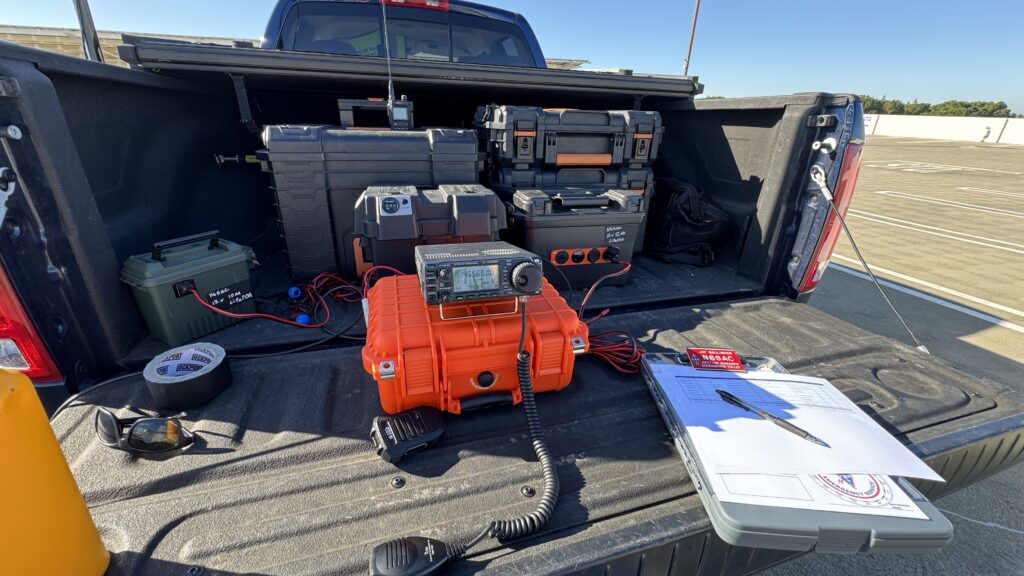
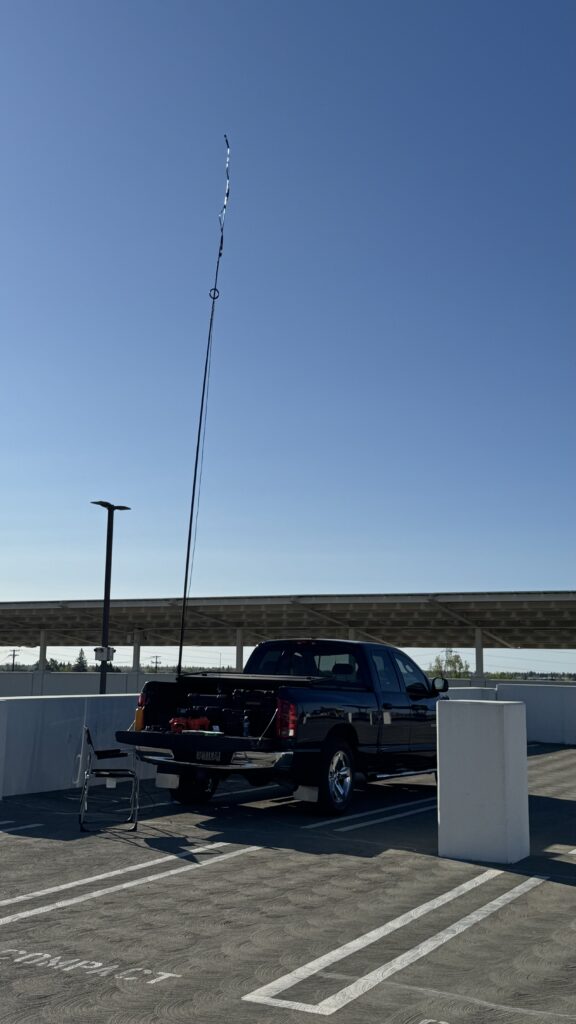
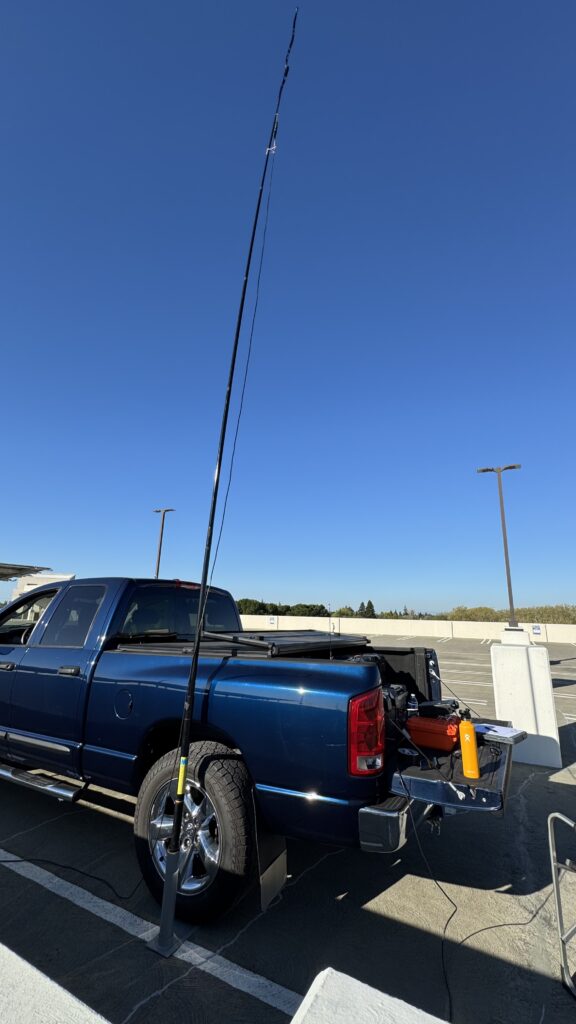
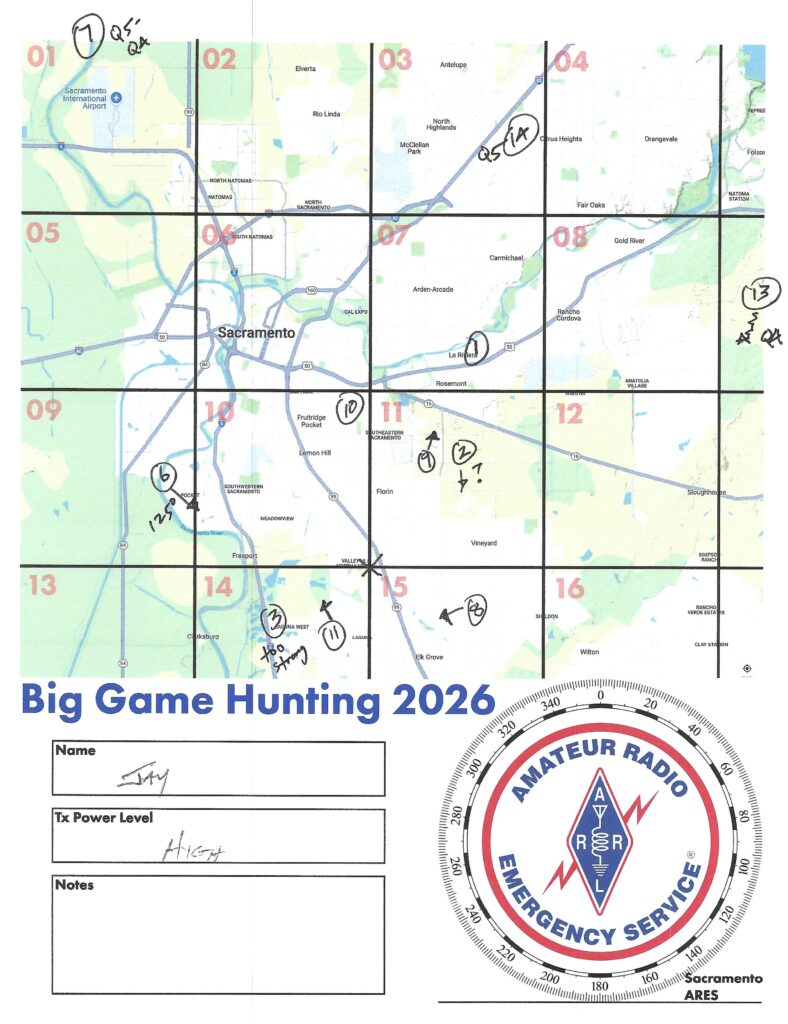
50 Watts VHF
My location is at the intersection of grids 10, 11, 14, and 15.
The team mostly had the correct initial direction. But as expected, they all reported that at 50 watts my signal was so strong that it proved difficult to use a directional antenna.
One goal of this exercise is to provide a chance to use different attenuation techniques – such as inline attenuators, tuning off frequency, or using body fade.
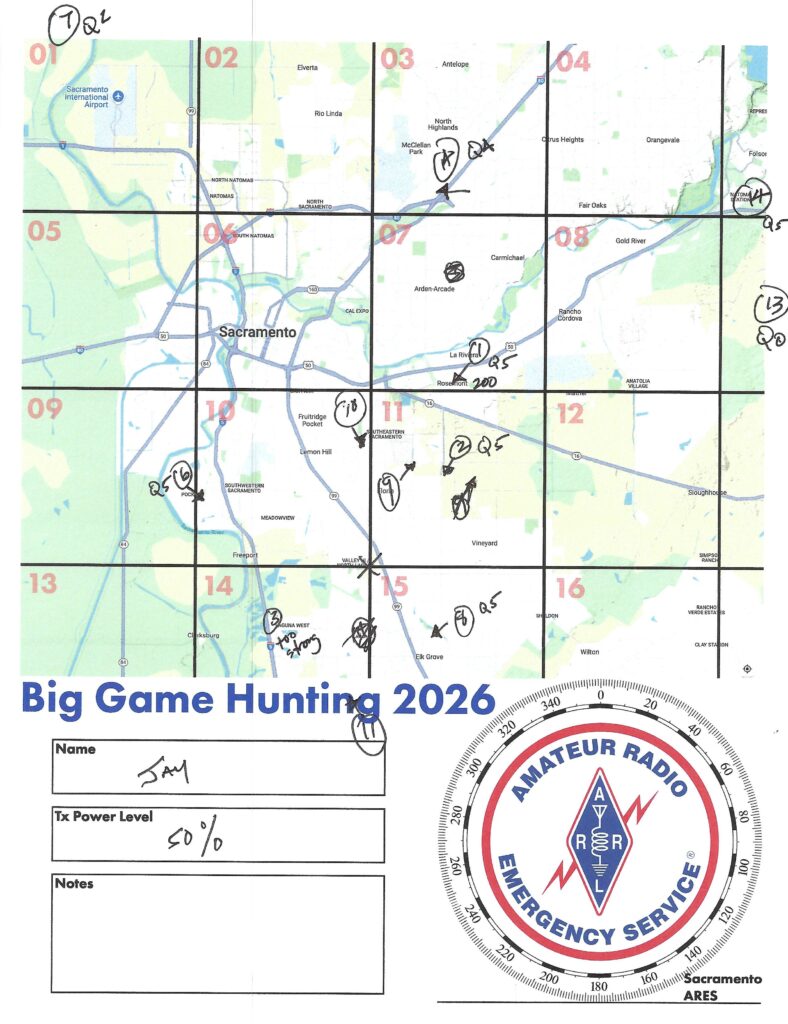
25 Watts VHF
This second round at 25 watts proved more productive. As the team was able to learn from each other’s reports in the first round, they had more confidence in their direction reports.
The strong signal still proved a challenge as reflected signals or broadside to the yagi antennas still provides a false direction sometimes.
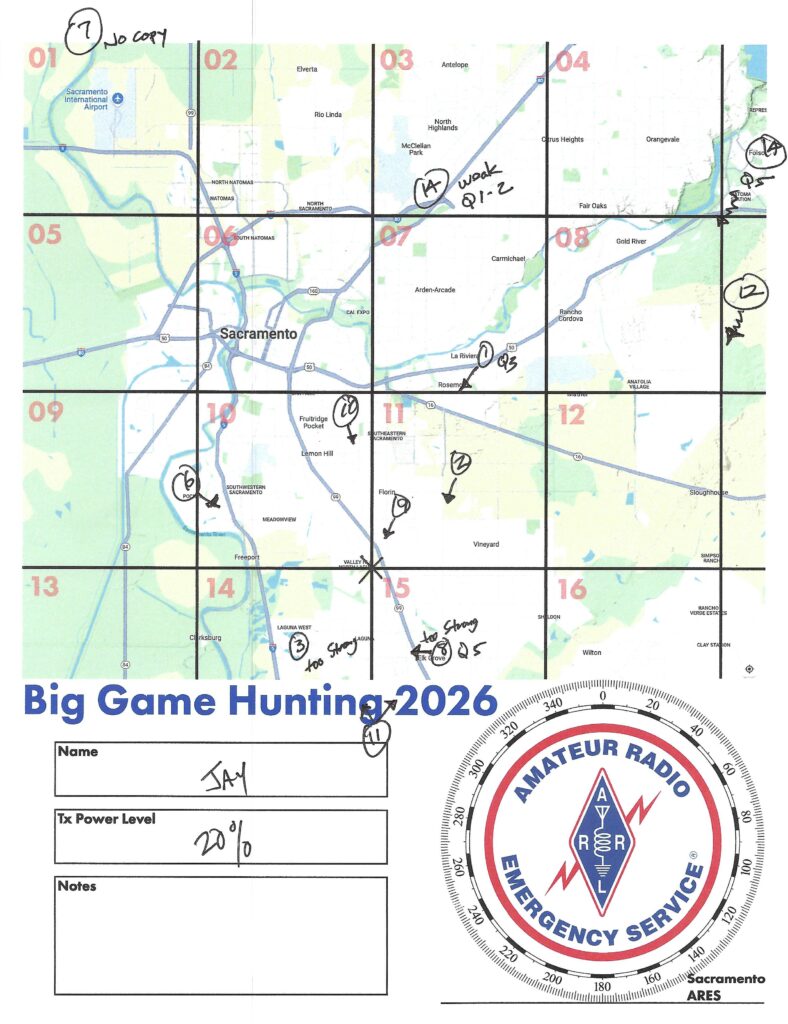
10 Watts VHF
Now at about 10 watts (or 20% power on an IC-706MKIIG VHF) several of the stations that were miles away reported lower Q scores on signal strength and quality. That was expected.
Related to that, the stations that were relatively close to me still reported Q5 signals – a big hint to where I was located.
Also, now that we were three rounds into this exercise, the team certainly gained experience and confidence in their direction finding.
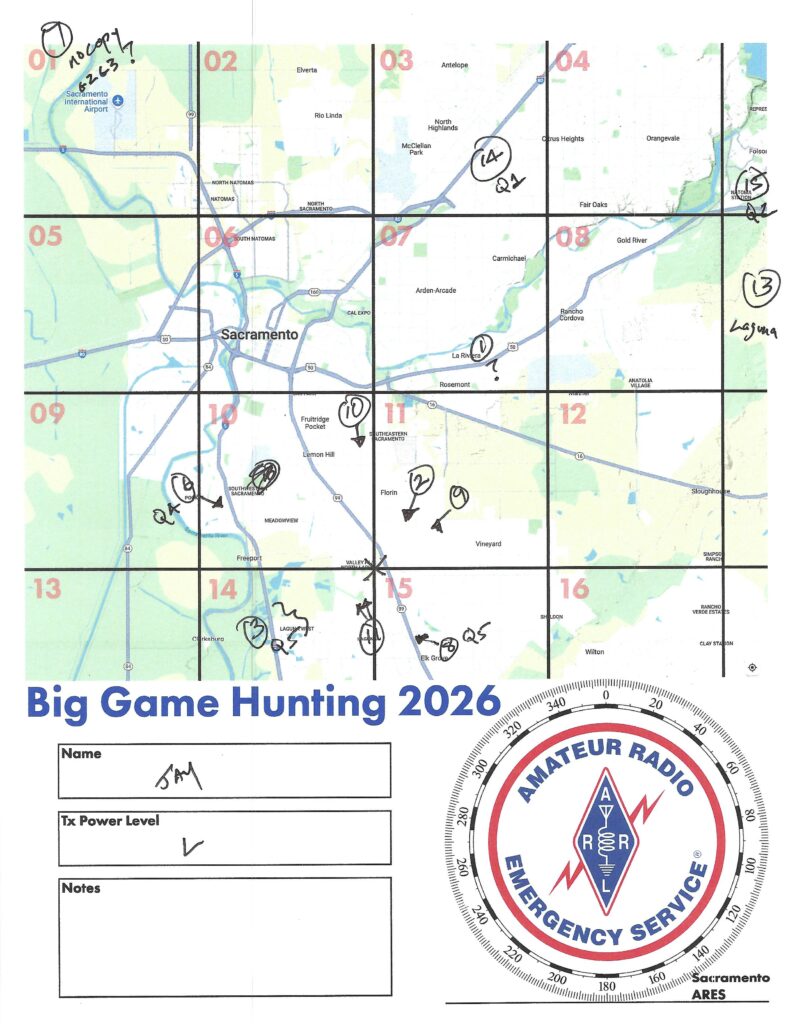
2.5 Watts VHF
Now down to sub-HT strength for this last round, the team really dialed in my location. They essentially all pointed right at me. And the stations very far away had no copy on me – which is valuable information.
Once I revealed my location, some stations were a little disappointed that they didn’t nail the exact relative angle. However, I was impressed that they did so well.
Why these exercises are so important
Cooperative triangulation events are essential. It helps you learn your equipment and hone your techniques. As an emergency communication team, we identify at least three scenarios where the team could be called into action using the skills we practiced here today…
- Wilderness Protocol – a station could be lost or disoriented. While the station transmits a team could triangulate their location very quickly to at least direct rescuers in the right direction.
- Malfunctioning Equipment – this has actually happened. Some equipment malfunctions, or a PTT has inadvertently been lodged, and now there is an unintended transmission source. A team can quickly identify which part of town that transmission is coming from and help direct folks nearby to help locate it.
- Purposeful Interference – if a station or a transceiver is being used inappropriately this same technique can be used to identify the general location. Then a more sensitive and direct direction-finding team can help identify the source of the QRM.
You must be logged in to post a comment.